What is a venture on Entity.ID
A real, recognized structure formed in minutes — people, rules, and a public announcement.
A venture on Entity.ID is a real structure: named people, bound by written rules, announced to the world. That's not a metaphor — it's the same three ingredients every company in history has been built from. Entity.ID just compresses the process from weeks to minutes.
The three parts
1. Constituents — the people
The verified humans who make up the venture: founders, partners, members. Each one has passed identity verification and personally signed their approval of the venture. Ownership percentages record who holds what.
This is what separates a venture from "a group chat with a name." The members are real, identified, and on the record.
2. Constitution — the rules
The written agreement the venture runs on: how decisions get made, how ownership changes, what happens when someone leaves, how disputes are resolved. You choose a constitutional model at formation (Model 1, Model 2, or standard-llc) and can amend it later through governance.
Every action your venture takes — treasury payments, votes, member changes — happens under these rules, and the record shows it.
3. Announcement — the public face
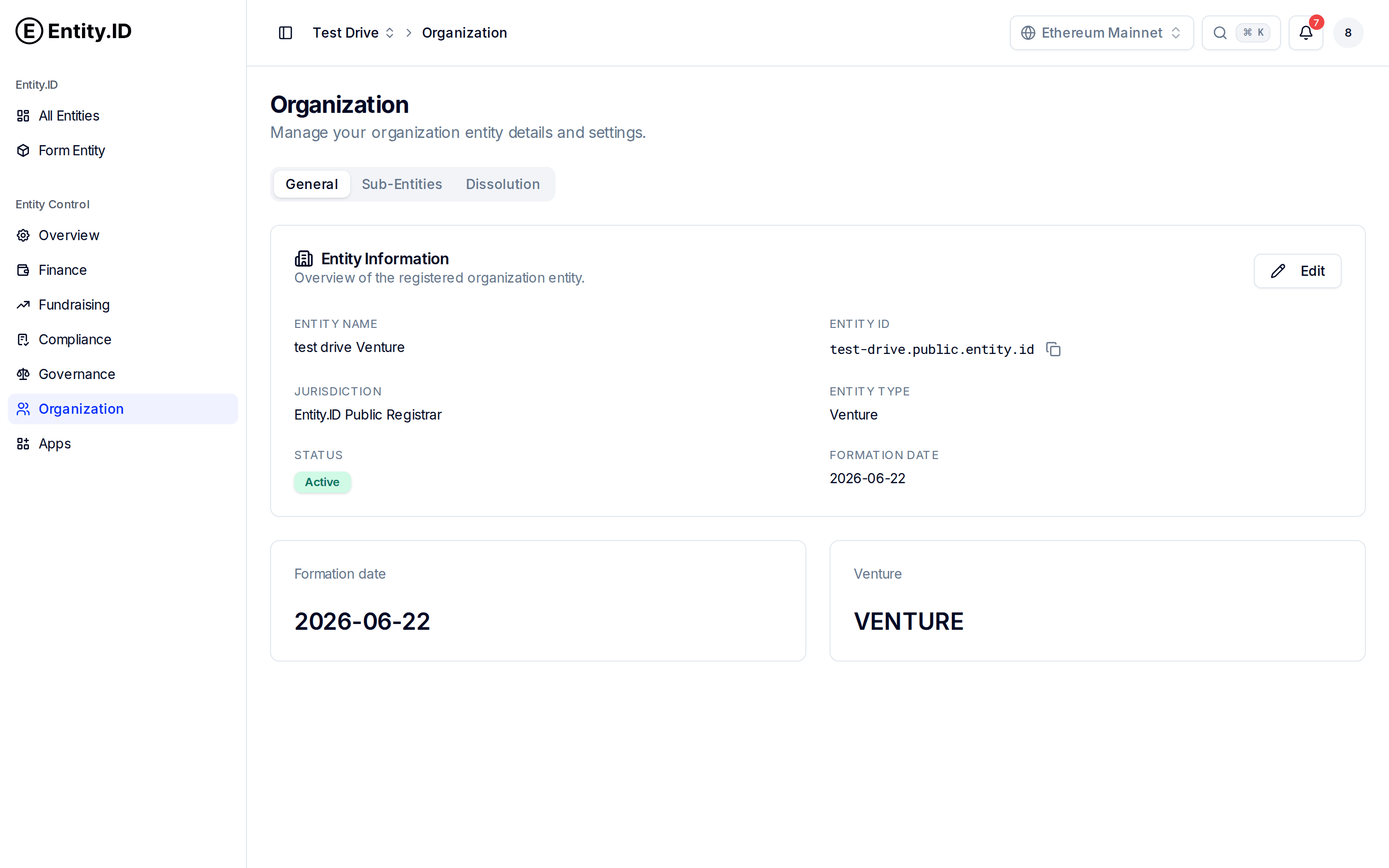
Your venture has a public page and a resolvable address:
tarka-labs.venture.public.entity.idAnyone — a bank, an investor, a potential partner — can look up the venture and see that it exists, when it was formed, and that its records check out. A company nobody can look up might as well not exist; the announcement is what makes your venture real to the outside world.
Incorporation is a fourth step — an optional one
Notice what's missing from the list: a government filing. That's deliberate.
Formal incorporation (an LLC or C-Corp) is an optional fourth step, not a prerequisite to operating. Your venture can hold funds in its treasury, issue SAFEs, make governed decisions, and build a verifiable history — all before any registrar is involved. When revenue, investors, or liability make incorporation worthwhile, everything carries over.
Most tools force the order: incorporate first (weeks, money, a jurisdiction chosen before you know if the project will live), then operate. Entity.ID inverts it: operate first, incorporate when it earns its cost.
Ventures are one of four types
"Venture" is the type for a company forming around a project. Entity.ID also supports Associations, Cooperatives, and Capital Pools — same three-part structure, different defaults. See Entity types.
Next steps
- How verification works — why the records are trustworthy
- Form your first venture